

Hospital operations are undergoing a fundamental transformation. Historically, hospitals have digitized patient records (Electronic Medical Records) and financial systems (Hospital Information Systems), but day-to-day operational decisions—such as bed management, patient transport, workforce scheduling, equipment utilization, and discharge coordination—have remained largely manual.
Operational AI extends beyond digitization by enabling hospitals to predict, optimize, and automate operational workflows using machine learning, generative AI, and real-time data. While clinical AI improves patient care, Operational AI improves the business of healthcare—reducing costs, increasing capacity, improving workforce productivity, and enhancing patient experience. Early adopters report measurable improvements in clinician productivity, patient throughput, asset utilization, and administrative efficiency.
Market Drivers
Several structural trends are accelerating Operational AI adoption.
- Rising operating costs
- Administrators are facing pressure to improve efficiency without proportional headcount growth
- Administrative burden
- Workload increased across the board, creating latent demand for automation for documentation, scheduling, billing, and coordination
- Patient expectations
- There is constant need for faster appointments, reduced wait times, better communication and responsiveness
- Data digitization
- Hospitals are increasingly going through more and more data digitization. Digital Operational Data enable AI-driven workflow optimization
- Financial pressure
- Market pressure to continuous productivity gains and revenue optimization is one of the biggest drivers to push for adoption of AI in Hospital Operations
Factors such as evolving care delivery models, workforce constraints, and system-wide inefficiencies are driving the impact on end users in the AI in hospital operations market. Segments include hospitals, outpatient facilities, and ambulatory care centers, as well as healthcare service organizations. – MarketsandMarkets
Operational Areas Where Hospitals Are Adopting AI
Operational AI is increasingly being deployed across non-clinical and administrative workflows where efficiency gains can directly improve hospital performance.
| Operational Area | AI Application | Expected Outcome |
|---|---|---|
| Patient Flow | Admission, transfer and discharge optimization | Reduced waiting time and improved bed turnover |
| Bed Management | Predictive bed allocation | Higher occupancy with fewer bottlenecks |
| Operating Theatre (OT) Management | Case scheduling and turnover optimization | Increased OT utilization |
| Workforce Management | Demand forecasting and staff scheduling | Lower overtime and better staffing balance |
| Clinical Documentation | AI scribes and discharge summary generation | Reduced clinician documentation burden |
| Revenue Cycle | Coding, billing, claims and denial management | Faster reimbursements and improved revenue capture |
| Patient Scheduling | Intelligent appointment management | Lower no-show rates and shorter wait times |
| Equipment Management | Asset tracking and predictive utilization | Better equipment availability |
| Supply Chain | Inventory forecasting | Reduced stock-outs and inventory costs |
| Hospital Command Centers | Enterprise-wide operational monitoring | Real-time operational decision support |
The industry is moving from isolated AI applications toward integrated hospital operating platforms that coordinate workflows across departments.
How Hospital Operations Change After Adopting Operational AI
Typically AI moves Operation from manual mode to automated where workflow is well defined and repetitive
| Traditional Hospital | AI-Enabled Hospital |
|---|---|
| Manual patient coordination | Predictive patient flow management |
| Static bed assignment | Dynamic bed optimization |
| Manual workforce scheduling | Demand-based staffing recommendations |
| Reactive equipment search | Real-time asset visibility |
| Manual discharge planning | AI-assisted discharge coordination |
| Department-level optimization | Enterprise-wide operational orchestration |
| Historical reporting | Real-time operational dashboards |
| Human-driven decisions | AI-assisted decision support |
By-product of AI based automation is operationalizing data. Operational AI shifts hospitals from reactive management to predictive and data-driven operations. This transition enables hospital leaders to manage capacity continuously rather than responding after bottlenecks occur.
How RTLS Enables the AI Journey
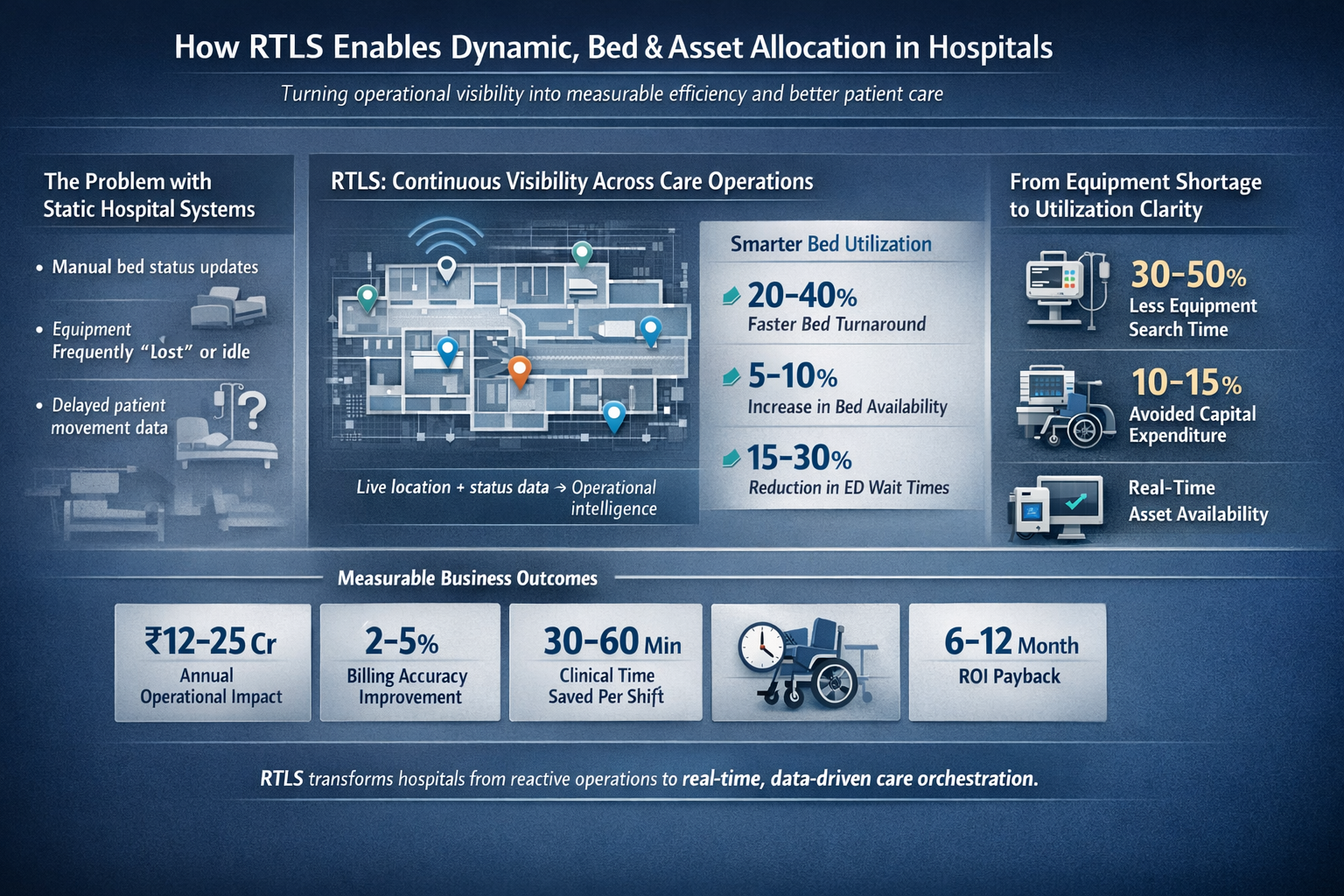
Operational AI depends on accurate, real-time operational data. RTLS provides this “digital nervous system” by continuously tracking the location and status of patients, staff, equipment, and workflows.
RTLS Enables AI By Providing:
- Real-time asset visibility: Knowing where infusion pumps, wheelchairs, ventilators, and imaging devices are located.
- Patient flow intelligence: Tracking patient movement from admission through discharge.
- Staff workflow insights: Understanding clinician movement and workload distribution.
- Operational event data: Recording transport times, room occupancy, and equipment utilization.
AI + RTLS Use Cases
| RTLS Data | AI Outcome |
|---|---|
| Equipment location | Predictive equipment allocation |
| Patient movement | Reduced waiting and transfer delays |
| Staff location | Optimized workforce deployment |
| Bed occupancy | Dynamic bed assignment |
| Transport requests | Intelligent porter scheduling |
| Room utilization | Capacity optimization |
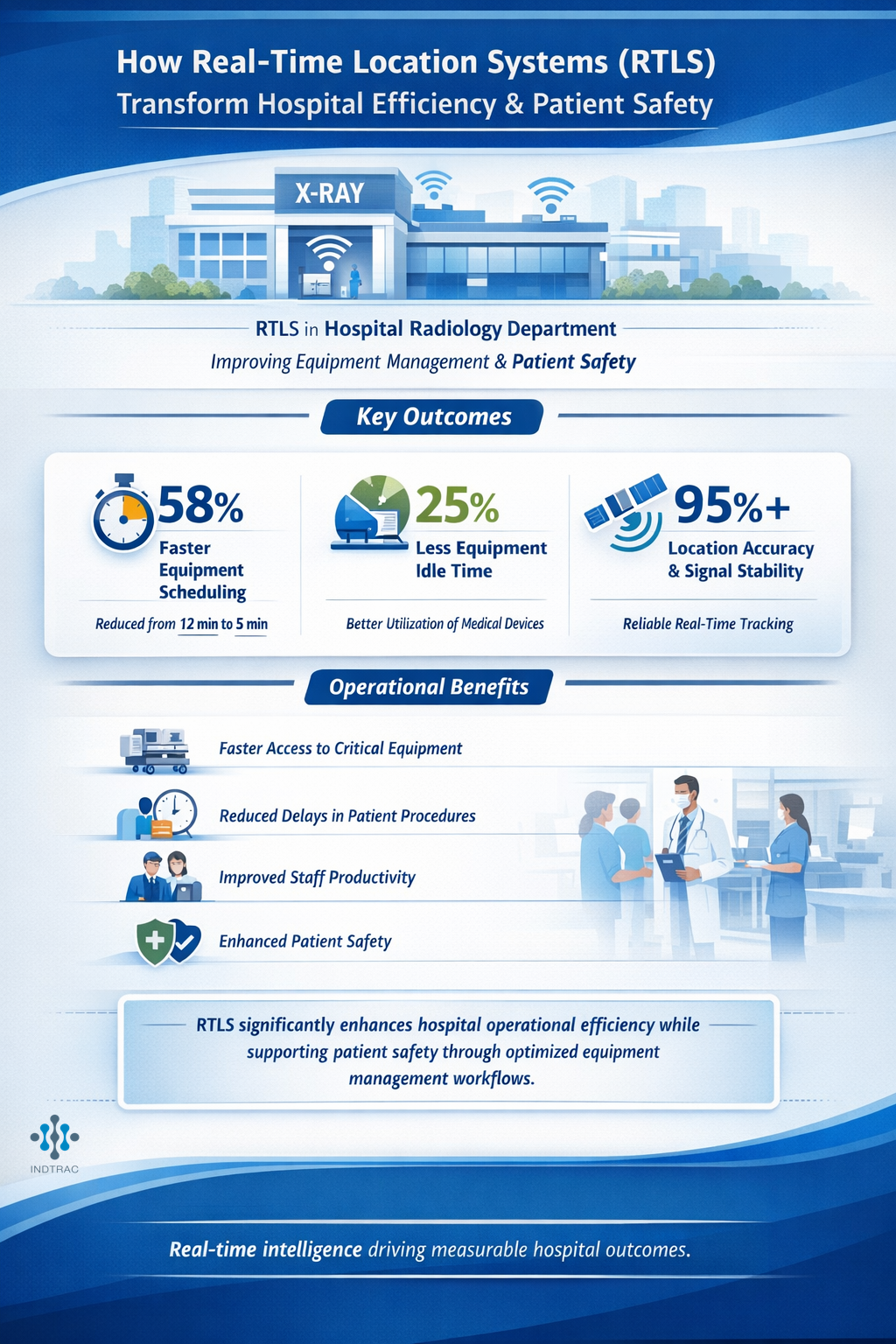
RTLS transforms static hospital information systems into real-time operational platforms, enabling AI to make context-aware recommendations. Recent studies show RTLS can substantially reduce equipment search times, improve scheduling efficiency, and enhance patient safety.
Gains Hospitals Achieve Through RTLS-integrated Operational AI
Operational Efficiency
- Shorter patient waiting times
- Faster admissions and discharges
- Improved patient throughput
- Higher operating theatre utilization
- Better equipment availability

Workforce Productivity
- Less administrative work for clinicians
- Reduced burnout
- Better workforce scheduling
- More time for direct patient care
Financial Performance
- Improved asset utilization
- Reduced overtime costs
- Better revenue cycle performance
- Lower operational waste
Patient Experience
- Faster appointments
- Better communication
- Reduced delays
- Improved care coordination
Real-World Evidence Supporting Operational AI Benefits
Several hospitals have reported measurable operational improvements after adopting AI and Real-Time Location Systems (RTLS).
| Organization | AI/Technology | Measured Outcome |
|---|---|---|
| Apollo Hospitals (India) | AI documentation assistant | Doctors gain approximately 2–3 hours per day by automating documentation and routine tasks. |
| Mid Cheshire NHS (UK) | RTLS equipment tracking | Staff spent significantly less time locating medical devices, with reported improvements including a 75% decrease in time associated with equipment tracking workflows. |
| Health-QUEST (India) | Real-time operational performance monitoring | Across 10 hospitals and over 10,000 patients, tracking operational KPIs such as door-to-triage and discharge times improved emergency department quality and efficiency. |
Challenges in Adopting AI for Hospital Operations
| Challenge | Impact |
|---|---|
| Fragmented hospital data | Limits AI accuracy and interoperability |
| Legacy Hospital Information Systems | Difficult integration across departments |
| Limited data quality | Weakens predictive models |
| Privacy and cybersecurity | Increased governance requirements |
| Regulatory uncertainty | Slower deployment of advanced AI |
| Staff resistance | Slower adoption and workflow disruption |
| High implementation costs | Longer ROI timelines for smaller hospitals |
| Lack of AI governance | Risk of inconsistent or unsafe AI use |
A common industry challenge is moving beyond successful pilot projects to enterprise-wide deployment. Hospitals often underestimate the organizational change, integration effort, and governance needed to operationalize AI at scale. A sane advice is to first analyze the data silos and find a common strategy to integrate the data across silos, before embarking AI journey, to maximize the benefit and to avoid future write-off of AI investment.
Future Direction and Considerations for Hospital Management in India
India’s healthcare system is well positioned to benefit from Operational AI due to increasing digitization, rising patient demand, and national digital health initiatives. However, successful adoption requires balancing technology investment with governance, workforce readiness, and infrastructure.
For Indian hospitals, the most successful strategy is likely to be a phased approach: digitize → instrument with RTLS → optimize with Operational AI → orchestrate with Frontier AI. This roadmap aligns with national digital health initiatives and addresses India’s dual challenge of expanding access while improving efficiency and quality.





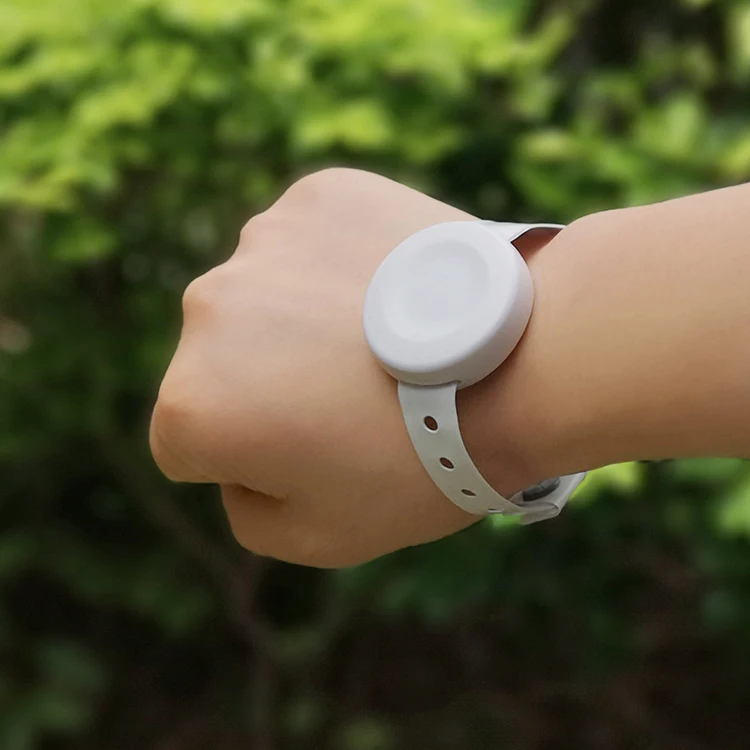 Bluetooth Low Energy (BLE) technology allows for seamless, low-energy communication over short distances, making it ideal for environments like hospitals where staff are constantly on the move. A BLE wristband with an integrated SOS button ensures that the wearer can discreetly and instantly alert security personnel in the event of an emergency, regardless of their location within the hospital.
